
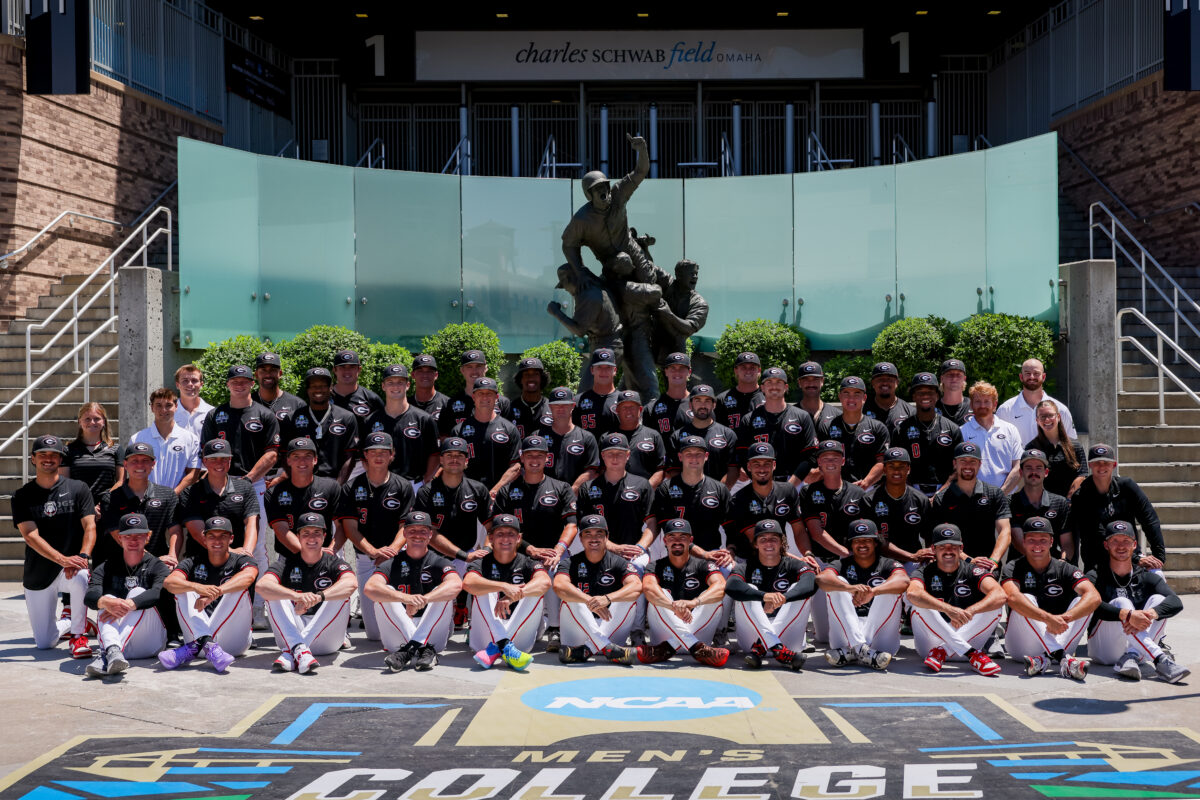
Wednesday, June 14th night brought the end of a historic run for the Georgia baseball program in Omaha at the Men’s College World Series. Although the season did not end with the team hoisting the trophy in the final weekend showdown series of the tournament, the season can only be viewed as a massive success for Coach Wes Johnson’s Bulldogs.
The Diamond Dawgs, a team that had not made an appearance in Omaha since 2008, entered the 2026 season facing lofty expectations once again after another disappointing finish to a phenomenal season in 2025. Over the last decade, Georgia has been blessed with no shortage of star power from dominant aces like Emerson Hancock to Golden Spikes winner Charlie Condon, but there had been basically zero postseason success to show for the talent. However, this season brought the turn of a new page into a different era of Georgia baseball.
From the opening weekend of the season, one thing was clear about this team: Georgia was going to hit a large amount of home runs. The most, actually, in the entire country with 179. Every single time the team took the field, the batting statistics that popped up on the screen appeared to be from a video game.
A lineup that was littered with 20+ home run batters and batting averages exceeding .300 throughout haunted pitchers from across the country, conference, and state who dared to toe the rubber against the Dawgs. From returning friendly faces such as Tre Phelps and Kolby Branch to new stars bursting onto the scene like Daniel Jackson, batters one through nine always posed a threat to get on base or leave the yard with one swing changing an entire game no matter who was on the mound for the opponents.
Home runs are nothing new for Coach Johnson’s program; however, the national media and skeptics all jumped to their usual narratives claiming Foley Field to be a “Little League park,” but the team quickly silenced these narratives by showing one that they were going to hit home runs everywhere.
From series sweeps in Starkville to epic series endings with Cole Johnson’s robbery against Tennessee, the Dawgs appeared to be destined for Omaha from start to finish of the regular season, and they were. SEC regular season champions for the first time since 2008 seemed like a good omen for the team as they prepared for the conference tournament in Birmingham, but they waltzed in and out of the Hoover Metropolitan Complex like they owned the place dominating their way to their first conference tournament championship in program history. Their impressive stretch of victories was the catalyst that elevated the team into the national No. 3 seed heading into hosting a regional in Athens, but this was just the beginning.
The Athens Regional had plenty of fireworks and nerves from the very first pitch. As national seeds across the country like UCLA, Georgia Tech, and numerous others failed to make it out of their own regional, the Diamond Dawgs came out of the gate blasting homeruns all the way up Kudzu Hill against Long Island, but the fun did not stop there.
Liberty presented a strong challenge to the Dawgs in both matchups, but Georgia simply was too much for the Flames to handle. Although Georgia handled their business against the Flames, it did not come without plenty of dramatics. In game 3 against Liberty, superstar third baseman Tre Phelps hit a go-ahead home run and started his trot around the bases making some form of a symbol to his father sitting above the first base dugout, but the Liberty head coach did not take kindly to this action and words were shared resulting in Phelps’s ejection along with the subsequent ejection of Coach Wes Johnson.
This ejection played a much larger role than it initially appeared due to the fact that Phelps would miss game one of the Super Regional hosted in Athens the following weekend against arguably the next best team left in the field of competition in Mississippi State. Although no one saw it then, this ejection may have propelled Georgia over the top to Omaha due to who had to replace Phelps in the lineup.
Who replaced him turned out to be Michael O’Shaughnessy, better known as “Shaggy,” at the hot corner of third base. The biggest luxury of this team was the fact that with Phelps’s unavailability the team went from an all-conference batter with 19 home runs to an experienced player with 20 home runs of his own. O’Shaughnessy’s swing in the eighth inning of game 1 helped seal a historic comeback for the Diamond Dawgs and subsequently take the wind out Mississippi State’s sails. This series of heavyweight bats brought more home runs than many casual fans probably saw all season watching college baseball in just two games, but ultimately Georgia got the last lick both games including Daniel Jackson’s epic extra inning home run in game two to propel the team to another victory sealing their trip to Omaha.
The series was filled with star power and future draft picks such as Mississippi State star Ace Reese, but Jackson proved to be the biggest star with his swing when it mattered most. The Rhino may have put up the most impressive statistical season in the history of college baseball and analytics along with winning every award possible on his way to his very own Golden Spikes Award coming very shortly, but his stats came to life in moments where they mattered most heading into Omaha.
However, Omaha appeared to be an entirely different challenge for the Diamond Dawgs. A giant stadium, jello shots, and opponents from all across the country presented new challenges as Georgia opened the competition facing Texas and their dominant pitching staff. Although all talk surrounded the talented Longhorn rotation, Joey Volchko stole the entire show in their first outing with a 15-strikeout performance elevating the team to a faceoff against another conference foe in the Oklahoma Sooners.
Outside of this Georgia team, Oklahoma was arguably the hottest team in the country headed into Omaha, and they continued that streak. Starting multiple freshmen on the mound and getting run support from an injured catcher, the Sooners steamrolled all of their competition heading into their matchup against Georgia, and they continued their dominance. Outside of three separate solo home runs in the first meeting of the teams, Oklahoma quieted the loud bats of the Georgia offense and sent them into the loser’s bracket against Texas once again, but if there is one thing Dawg fans have learned over the last few seasons since Texas joined the SEC, it is simply that Georgia has no trouble defeating them regardless of the sport, scenario, or predicament. Their second victory against the Longhorns positioned Georgia for a rematch against the Sooners, but the outcome remained the same.
That’s right. After over 60 games and 179 home runs, Georgia’s march to destiny ended early in Omaha (but not without a final Kolby Branch home run). Many outside the program and possibly new to the sport may have viewed the ending to the season as a disappointment, but all of Dawg Nation viewed this season as unprecedented success for Coach Johnson’s Bulldogs. No, the team did not win a national championship, but they did get over the hump of Omaha that appeared to haunt them over this past decade or so. This along with the plethora of victories listed above are all reasons why this team will most certainly be back in a position to go for a title once again in 2027 due to one simple fact about Georgia Athletics: our teams don’t rebuild, they reload.