
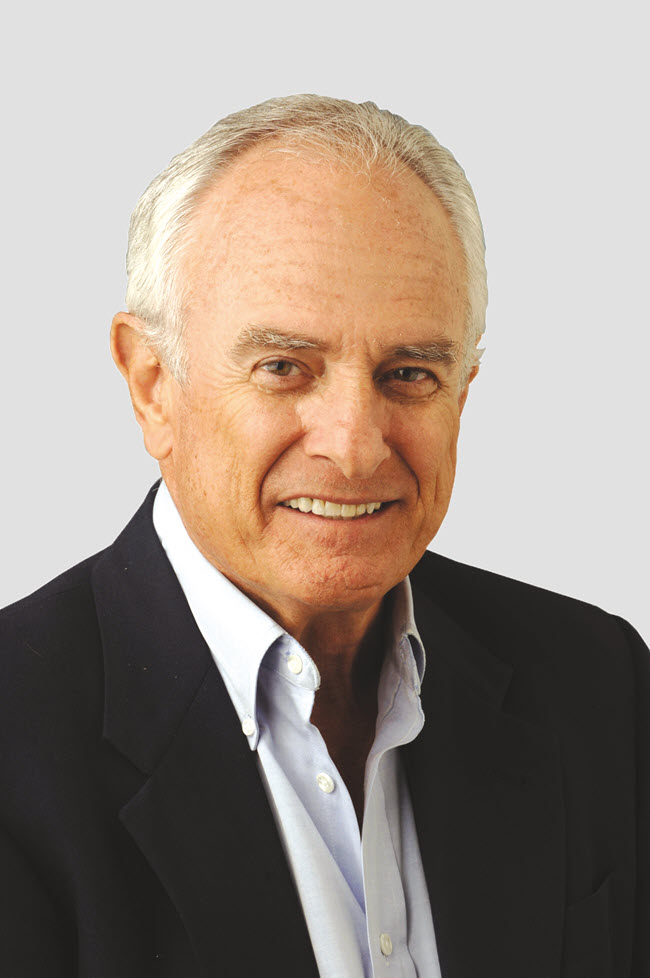
George Whitton arrived in Athens in 1955 to play football for Georgia, proud to be a Southeastern Conference player who had other interests, the principal one being that he was diligently focused on earning a degree.
After all, football was footing the bill for his education, and he wanted to make the best of his academic opportunity. All he had to do was show up for class, pay attention, and give his textbooks the same attention he gave his football playbook. Elementary, yes, but the basics will take you a long way in life. However, George was an overachiever.
He was an exemplary student often surrounded by teammates who gave the classroom the back of the hand. George wanted to excel at anything he undertook.
He made the Southeastern Conference All-Academic team. He also had time for the SAE social fraternity and ROTC. George was a busy man while he was on campus.
Growing up in Columbus, George, with his commitment to UGA, was always appreciated by the Georgia contingent who were passionate about Coach Wallace Butts and UGA.
He grew up in the days when the Georgia-Auburn game was played at old Memorial stadium, 600 Veterans’ Parkway, which seated only 15,000—but it appeared that twice that many found their way into the stadium when the two schools met in November.
“It was so packed,” Auburn coach Shug Jordan once quipped,” that if you went to the bathroom, you lost your seat.” The partying began on Monday, the week of the game, and continued through Saturday night.
Georgia had the upper hand during George’s early years, but when Jordan left Athens as an assistant in 1951 to become coach at his alma mater, it was different.
Nonetheless, George considered it a big thrill to play in this big game in his hometown. He also appreciated the military brass at nearby Ft. Benning.
Generals like Dwight Eisenhower, Omar Bradley, and George Patton were all stationed at Ft. Benning during their respective careers and became part of the Muscogee social scene while they were at Benning.
George, later in life, knew about their careers and admired their successes. He enjoyed football and military history and was well informed on both subjects.
Playing in the last game of the Georgia-Auburn series in Columbus in 1958, George was a great admirer of his coach and was happy to be one of his charges who knew what “paying the price” meant. He survived the rigors of football and boot camp, although the latter for him was not very challenging in that his ROTC experience enabled him to leave campus as a commissioned officer.
He spent 25 years in the Army, retiring as a Lt. Colonel. He was a Green Beret, a Master Parachutist, and Commander of a Special Forces Airborne Unit. Following his military career, he entered the banking business and retired from the C&S Bank in Athens as head of the Trust Department.
An avid outdoorsman, George enjoyed hunting and fishing, but declining health in his late years took away one of his greatest pleasures. A highlight of any weekend for him was to spend time at a lodge near Tignall in Wilkes County with his close friends and teammates, Fred Brown and Cicero Lucas.
I hunted and fished a couple of times with these Three Bulldog Amigos, who were gifted outdoorsmen. They were expert marksmen and casters. George was a gifted artist and his outdoor watercolor scenes were
striking and becoming.
Once when he and his wife, Beth, were making plans to take a trip to the United Kingdom, I made bed and breakfast arrangements with English friends who lived near Ramsgate to host the Whitton’s. I was happy to connect them, and the reports were that a good time was enjoyed by all.
George was a loyal member of the Wally’s Boys Association, serving on the executive committee for years. He was a man of faith, loyalty, and a devout friend of UGA and Mother Nature.
His was a life well lived.
Üsküdar En İyi Su Kaçağı Tespiti Firması Üsküdar su kaçağı tespiti için kesinlikle öneririm. https://lasirenaperdida.es