
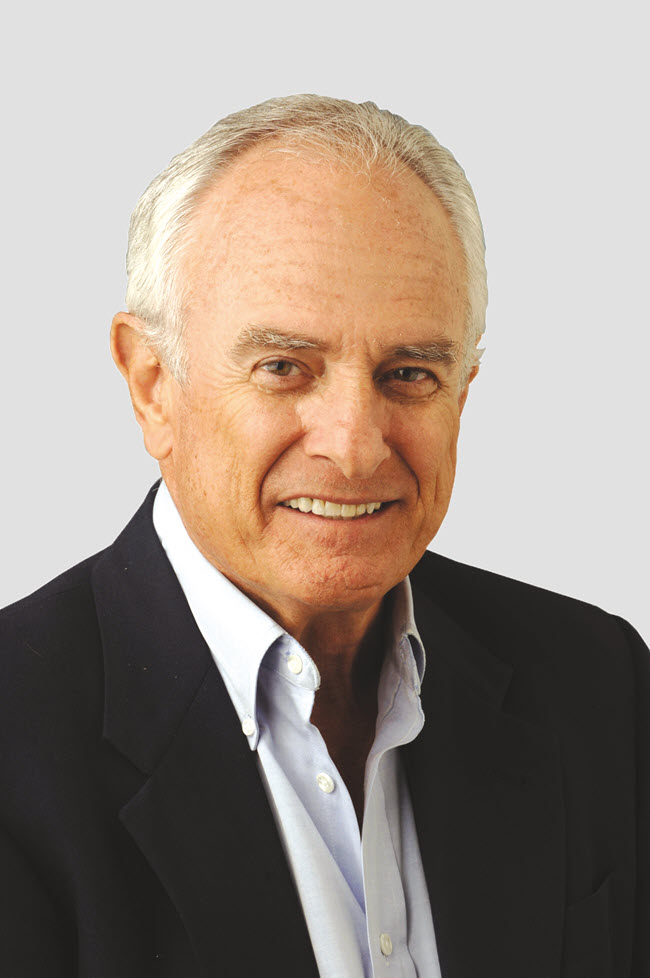
For some time, I have been planning to read Michael Thurmond’s biography of the founder of our state, James Edward Oglethrope, and am happy to say I have finally gotten around to that. Is it ever a good read!
The author’s research, exploration, and analysis are remarkable as his own life has been. He packs many illuminating facts and details in this fine work. I knew that originally Georgia was not a slave state, but Michael Thurmond reveals that our founder was a passionate abolitionist although he began his professional career as a slave trader.
In a strange sort of way, you could advance the notion that Eli Whitney’s inventing the cotton gin preserved and advanced slavery. Cheap labor has always been the foundation of the wealth many rich folks. I also knew that this book, before turning the first page, was written by an extraordinary man who qualifies as a historian and has enjoyed being a public servant during his adult life.
Growing up in Athens in the waning days of official segregation, Michael is the son of a sharecropper. He weighed an unimposing 126 pounds but could hold his own as a reserve running back in high school football when the all-black school, Burney-Harris, merged with all-white Athens High and became Clarke-Central.
His teammates and best friends included Horace King, Clarence Pope, and Richard Appleby. They sold Cokes, making pocket change, but got in free to watch the Bulldogs play. Little did they know, initially, that change was coming rapidly and that when they finished high school the above threesome, along with Chuck Kinnebrew and Larry West, would become the first black players on scholarship at UGA.
Each of them would distinguish themselves as postgraduates, but the 126-pound backup to King, who would play nine years with the Detroit Lions in the National Football League, has distinguished himself as a public servant.
(As an aside, Thurmond underscores that even though he was a lightweight, his accent on toughness—”always getting up when knocked down”—enabled him to compete fluently as he set the school record for the 100-yard dash in track competition.)
His political career began in his hometown when he became the first African American elected to the Georgia General Assembly since Reconstruction. He was subsequently elected Labor Commissioner for three terms, and in 2017 became the C.E.O. of Dekalb County.
His resume is chock full of success vignettes and signature accomplishments, the highlight being that when he took over as DeKalb’s chief executive, he “inherited” a $23 million dollar deficit. When he left office—owing to term limits—he departed with a $150 million dollar surplus in the county’s treasury.
With everyday man work habits, common sense logic, an underscoring of goodwill, and leading by example, good things happened for this metro county.
Michael—the informality of referring to him by his first name—reflects that he is more than a politician. He is a down-to-earth good neighbor type. His commitment to write the book about Oglethorpe came about when he was appointed to the “James Oglethorpe Tercentenary Commission” by former Gov. Zell Miller and visited Oglethorpe’s gravesite in Cranham, England.
When the 57-member Georgia delegation gathered at the church which was Oglethorpe’s final resting place, there was a plaque that stunned Michael. The plaque included this note in its historical tribute to the father of Georgia: “He was the friend of the oppressed Negro.”
Initially, he was overcome with disbelief based on what he had read over the years. When he delved into the details of the founder’s history, he was overwhelmed with what he learned about Oglethorpe.
The founder of our state had another encounter which illuminates the contradiction of many who left the Old World in search of religious freedom, yet perpetrated exclusion and in some case cruel punishment in their new environment.
For example, Jews were not allowed to migrate into Georgia. In 1733, there was a fever outbreak among the colonists when a ship, “The William and Sarah,” dropped anchor in the Savannah harbor with 42 Jewish migrants on board, including a “respected physician,” Dr. Samuel Nunes.
Oglethorpe sent word that the physician could come ashore and doctor the sick colonists but refused to allow the doctor’s family and the other Jewish migrants to leave the ship.
The doctor took a standfast stance and refused to accept the terms offered. He would only doctor the ailing colonists if everybody on the ship were allowed to disembark and settle in the Georgia colony. Since the charter allowed for “religious freedom for all non-Catholics,” the Jewish party, after further review, came ashore, and Dr. Nunes set about providing relief for the stricken colonists.
This story will tell you much about the early settlers and the founder of what is now the state of Georgia. Who better to bring us he inside story of our state’s history than the son of a man whose ancestors were enslaved.
When Michael was honored by the Georgia chapter of the National Football Foundation last April, his response overwhelmed the audience as he spoke to future of America in positive and patriotic terms.
The view here is that General Oglethorpe would have been proud.
ФизиотерапияФизиотерапия, Рехабилитация, Мануална терапия, Хиропрактика, Лечебен масаж, Иглотерапия, Хиджама (Кръвни вендузи), Лазерна епилация, Антицелулитен масаж, Антицелулитни терапии